
Engaging Family History Projects for Kids: Uncover Your Ancestry Fun!
Family history, often perceived as a pastime exclusively for adults, holds a captivating world of discovery that children can embrace with enthusiasm. Far from being a tedious task of sifting through dusty records, genealogy can become an exciting journey for young minds, connecting them to their roots and fostering a profound sense of identity. Teaching children about their family legacy is not only easier than you might imagine but also incredibly rewarding, offering a unique blend of education and fun.
In an era where personal connection sometimes feels lost amidst digital distractions, delving into family heritage offers a tangible link to the past. It provides context to who they are, where they come from, and the incredible stories that shape their family’s narrative. These experiences are invaluable for building self-esteem, understanding cultural diversity, and appreciating the journey of generations past. Gather your family, prepare for some creative fun, and embark on a memorable exploration of your unique lineage. Here are 7 fantastic family history projects designed specifically for kids, guaranteed to spark their curiosity and light up their eyes as they learn about the people and places that have contributed to making them who they are today.
1. Crafting DIY “Family Tree” Ornaments
Transform your family photos into cherished keepsakes with this simple yet meaningful project. Perfect for any holiday tree or even as year-round decor, “Family Tree” ornaments are a wonderful way to keep ancestors’ faces familiar. Start by gathering a collection of family photographs, both old and new. Make copies of these photos – either digitally printed or photocopied – as this allows for safe handling during the crafting process.
Once you have your copies, enlist your children to carefully cut out the faces or figures from the photos. This activity sharpens their fine motor skills while allowing them to engage directly with their family members’ images. Next, help them paste these cut-outs onto sturdy cardstock. Consider using craft foam or even recycled cardboard from cereal boxes for a more robust base. For an extra touch of durability and sparkle, you might even laminate them or cover them with clear contact paper. Attach a colorful ribbon or a simple loop of twine to the back of each ornament, making them ready for hanging.
To truly embed the learning, dedicate the back of each ornament for critical family information. Encourage children to write down the name of the person, their birth and death dates (if applicable), and one interesting fact or significant event associated with them. This hands-on recording helps them remember key details about their heritage and reinforces the connection to each individual. Imagine decorating your holiday tree with generations of family faces, each telling a story! This project not only creates beautiful decorations but also serves as a constant, gentle reminder of their ancestry, making it a perfect activity for kids interested in genealogy. You can find inspiring examples of similar photo ornaments here, showcasing the creative possibilities.
2. Engaging Family Photo Puzzles
Puzzles are universally loved by children and serve as an excellent, interactive tool to familiarize them with the faces of their ancestors and relatives. Creating custom family photo puzzles is a fantastic way to turn old photographs into engaging games that promote recognition and discussion.
The simplest method involves copying family photos and pasting them onto a piece of firm cardboard, such as a cereal box or a sturdy craft board. Once the glue is dry, use a permanent marker to draw puzzle piece outlines directly onto the photo, then carefully cut along these lines. The more intricate the cuts, the more challenging the puzzle will be, so tailor the complexity to your child’s age and skill level. As children work to assemble the puzzle, you can discuss who is in the photo, where and when it was taken, and any stories associated with the individuals. This turns puzzle-solving into a rich storytelling opportunity, making family history come alive.
Beyond flat puzzles, you can explore other creative variations. Consider making puzzle blocks by attaching different photo segments to the sides of wooden or cardboard cubes, allowing for multiple image combinations. Alternatively, popsicle-stick puzzles offer another fun approach; simply line up several craft sticks, glue a photo across them, and then separate the sticks once dry. For a more professional finish, many retailers like Walmart and Walgreens offer special printing services to create high-quality puzzles directly from your digital photos. This option is fantastic for preserving more delicate or unique family images in a durable, playable format. These custom puzzles are not just games; they are powerful tools for memory-building and engagement in your children’s genealogy journey.
3. Crafting a Kid-Friendly Family Cookbook
Food is a universal language and often one of the strongest links to our cultural heritage and family traditions. Creating a “heritage” cookbook with your children is a delightful and delicious way to preserve family recipes while teaching them about their culinary roots. This project encourages interaction across generations and gets kids involved in the kitchen, fostering a love for cooking and family history simultaneously.
Begin by interviewing grandparents, aunts, uncles, and other family members to collect their most cherished recipes. Ask your children which family dishes are their absolute favorites – perhaps Grandma’s famous cookies, Uncle Joe’s secret barbecue sauce, or a traditional holiday meal. Get them actively involved in the “recipe testing” phase; measuring ingredients, stirring, and even tasting will make the experience hands-on and memorable. You might also ask family members for stories behind each recipe – who first made it, what special occasions it was served at, or humorous anecdotes related to its preparation.
To make the cookbook visually appealing, take photographs of each finished dish, and include pictures of family members who contributed the recipes. Once you’ve selected several recipes and gathered accompanying stories and photos, it’s time to design the pages. Encourage your children to help arrange layouts, adding colorful paper, stickers, drawings, or even their own handwritten notes. Each page can feature the recipe, a photo of the food, a family photo, and a small section detailing its origin and the family member it came from.
For assembly, you have several creative options. A simple three-ring binder allows for easy additions and rearrangements over time. Alternatively, you can create a more permanent keepsake using a plain photo album, adhering your recipe pages to the album sheets. For those looking for a more professional touch, many online services allow you to design and print custom recipe booklets or even hardcover cookbooks. This project isn’t just about collecting recipes; it’s about celebrating family bonds, sharing culinary knowledge, and creating a tangible piece of your family’s edible history that can be passed down for generations. It’s an incredibly engaging way to involve children in their family’s past through the universal joy of food.
4. Designing an Easy Family Photo Book
Photographs are powerful portals to the past, and even the youngest members of a family can develop a deep connection to their ancestors and relatives by regularly viewing images of those who came before them. Creating an accessible family photo book is an ideal way to introduce children to their genealogy in a gentle, visual, and highly engaging manner.
Start by curating a collection of family photos. These can range from very old black-and-white images to more recent snapshots. If you have physical photos, scan them into your computer to create digital copies. This protects the originals and allows for easy manipulation and printing. Using basic photo editing software, you can add simple captions directly onto the images, identifying the people, places, and dates. If digital editing isn’t your preference, simply print copies of the photos and prepare small slips of paper with handwritten information to place alongside each picture.
The key is to make the book inviting and easy for small hands to manage. Purchase a simple photo album – look for sturdy, child-friendly options like this padded picture album – or even create a scrapbook-style binder. Arrange the photos chronologically, by family branch, or by theme (e.g., “Family Vacations,” “Grandparent’s Childhood”). As you place each photo, talk about the people in it. Who are they? What do you know about them? What were their lives like? Encourage children to ask questions and share their observations.
Once complete, place this special genealogy photo book among the other books your children enjoy. The familiarity of seeing it alongside their favorite stories will encourage them to pick it up again and again. Each time they flip through its pages, they’ll not only recognize faces but also absorb facts and stories, building a stronger mental picture of their family’s narrative. This simple photo book becomes a treasured possession, fostering a sense of belonging and curiosity about their unique family tree, making it an essential tool for young genealogists.
5. Crafting a Fun Family Memory Game
A family memory game is an ingenious way to combine entertainment with educational value, helping children learn about their heritage in an engaging, playful format. This project is highly customizable and can be adapted for various age groups, ensuring maximum engagement.
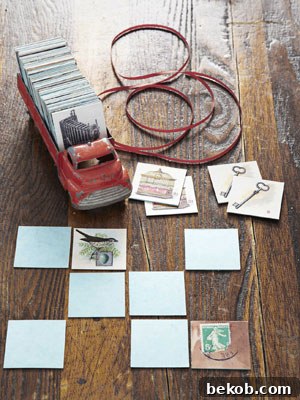
To create your game, start by making copies of family photos. For durability, you might consider printing them on cardstock or even using a photo printing service. The classic approach involves pasting identical pairs of photos onto an old deck of playing cards, ensuring each card is uniformly sized. Alternatively, you can simply mount the photos on thick cardstock and then carefully cut them into matching pairs, as beautifully demonstrated here. For an added layer of learning and protection, laminating the cards will make them last longer and withstand countless games.
To enhance the educational aspect, consider scanning the photos and using photo editing software to add a small text box to one card of each pair. This text box can contain a name, a date, a significant event, or a fun fact about the person or moment depicted in the photo. For example, one card might have a picture of Great-Grandpa John, and its matching card might have the same picture with text: “Great-Grandpa John, born 1920, loved fishing!”
Memory is a fantastic game for even very young children, helping to develop their recognition and recall skills. As they match pairs, you can elaborate on the stories behind the faces. For older children, or to introduce more variety, you can create multiple sets of cards and combine them to play other traditional card games like “Go Fish” or “Old Maid,” adapting the rules to incorporate family facts. Imagine calling out, “Do you have anyone from the Johnson side of the family?” This family memory game is more than just a diversion; it’s a dynamic, interactive tool that transforms learning about ancestry into a memorable and fun activity, reinforcing connections to their family’s past with every match.
6. Creating an Inspiring Family “Tree” Wall
A family “tree” wall is more than just a decorative feature; it’s a living, breathing testament to your family’s journey, making history a visible and constant presence in your home. This project invites children to actively participate in curating and arranging their family’s visual narrative, fostering a deep connection to their heritage.
Begin by involving your children in selecting and arranging family photos. Choose a prominent wall in your home – perhaps in a hallway, living room, or play area – where the display will be frequently seen and discussed. Encourage them to think about how they want to group photos: chronologically, by family branch, or by significant life events. Frame the photos in a variety of styles and sizes to add visual interest.
To make the wall truly unique and to tell a richer story, incorporate tangible family heirlooms. Frame special items such as antique handkerchiefs, military medals, pocket watches, vintage eyeglasses, or even old letters. These objects offer a tactile link to the past, making the family history feel more real and immediate. You could mount small shelves to display three-dimensional items or use shadow boxes for delicate pieces.
For a truly bold statement, consider painting a literal “family tree” directly onto the wall, with branches extending to hold photo frames. Alternatively, many decorative wall decals are available, offering an easy way to create a striking tree design without permanent paint. This framework then serves as the perfect backdrop for your photos and heirlooms. A wonderful example of an integrated family wall that includes a genealogy fan chart can be found at Design Mom, showcasing how to blend visual elements with genealogical data. This ongoing project not only beautifies your home but also creates a daily opportunity for children to learn about, appreciate, and discuss their family’s rich history, turning a simple wall into an inspiring family narrative.
7. Building a Comprehensive Family Map
Understanding the geographical origins of one’s family can ignite a powerful sense of pride, curiosity, and connection to family history that few other activities can achieve. For children, visualizing where their ancestors lived, traveled, and settled makes the abstract concept of heritage tangible and exciting. Creating a family map is an immersive way to explore this geographical journey.
To begin, acquire a large, detailed map. A world map is ideal for tracing international migration patterns, but national or even regional maps can be used if your family history is more localized. Consider a visually appealing large poster map like this vintage world map found on Amazon, which can also double as a stylish wall decoration.
Next, engage your children in the research process. This might involve interviewing grandparents, looking through old family documents, or even simple online searches if you have some genealogical data. The goal is to identify the countries, states, and specific cities or towns where their ancestors were born, lived, or important family events took place.
Once locations are identified, use tacks or pins of different colors to mark each spot on the map. You might use one color for paternal ancestors and another for maternal, or different colors for different generations. Colored string or yarn can then be used to connect these points, illustrating migration routes and family movements over time. This visual representation of journeys helps children grasp the vast distances their ancestors may have traveled.
To further enrich the project, prepare small pieces of paper with identifying information for each pinned location. These notes can include names, dates, brief historical facts about the area, or even miniature photos of family members associated with that place. Attach these notes near their respective pins. This project not only teaches geography and history but also encourages critical thinking and research skills. It transforms abstract family stories into a concrete, interactive display, giving children a profound understanding of their origins and a unique appreciation for their family’s global journey.
Embarking on these engaging family history projects together will undoubtedly ignite your children’s curiosity and deepen their understanding of where they come from. Each craft and activity offers a unique avenue for exploration, allowing for personalization to perfectly suit your family’s unique needs and interests. Don’t hesitate to adapt the ideas, add new photos, or incorporate cherished items and stories as your genealogical journey evolves. The beauty of these projects lies in their flexibility and the opportunity for continuous discovery.
As you delve into these activities, you’ll witness firsthand how your children develop a stronger sense of identity, an appreciation for their ancestors’ lives, and a deeper connection to their family narrative. These aren’t just one-time crafts; they are building blocks for a lifelong interest in heritage and a legacy of shared stories. Watch with joy as your family’s genealogy truly comes to life, not just in records and documents, but through the vibrant, active participation of its youngest members.
Kayla Lilly is a photographer, writer, wife, and mama making a house a home in eastern Idaho. She met her mister while working at an amusement park and married him a year later after deciding there was no way to live without him. The amusement has continued as they’ve added three kids and a passel of pets to their lives while finishing college and starting a photography business. Drawing inspiration from the whirlwinds of marriage, parenthood, and the media, Kayla blogs at www.utterlyinexperienced.blogspot.com, and spends the rest of her time chasing chickens, organizing junk drawers, diapering toddlers, and photographing everyone willing to step in front of her lens.
Featured image courtesy of Jones Design Company.