
Mastering Children’s Book Organization: Smart Strategies for a Tidy and Engaging Reading Space
Children’s books are more than just paper and ink; they are gateways to new worlds, crucial tools for cognitive development, and cherished memories for both kids and parents. From colorful board books for toddlers to imaginative picture books and early chapter books, a child’s collection can grow rapidly, sometimes veering into disarray. A well-organized collection of children’s books not only makes reading more inviting but also simplifies cleanup and helps foster a lifelong love for literature. If your home library is starting to resemble a playful chaos, fear not! We’ve compiled a comprehensive guide with effective, practical, and SEO-friendly ideas to help you organize children’s books, creating a serene and stimulating reading environment.
1. Curate and Declutter: The Essential Editing Process
Before you even think about shelving or categorizing, the most crucial first step in organizing children’s books is to critically evaluate your existing collection. This is where the powerful “edit, edit, edit” principle comes into play. Think of yourself as a librarian curating a special collection for your little readers. This initial decluttering phase is vital for several reasons:
- Optimizing Relevance: Do your kids actively read all the books they own? Children outgrow books quickly, both in terms of content and physical condition. A book that was perfect for a 2-year-old might be too simple or less engaging for a 5-year-old.
- Identifying Damaged Books: Books with torn pages, missing covers, or excessive crayon marks may not be suitable for keeping. Decide whether they can be repaired or if it’s time to let them go.
- Managing Duplicates: It’s common to accumulate multiple copies of popular titles. Keep the best-conditioned one and consider donating the others.
- Creating Space: A smaller, more manageable collection is easier to organize and maintain.
How to Approach the Editing Process:
Go through each book with your child (if they’re old enough) and ask these key questions:
- Is it Age-Appropriate? Put aside books that are too young (e.g., board books for a 7-year-old) or too advanced (chapter books for a toddler).
- Is it Still Engaging? Observe your child’s reading habits. Are there books they consistently ignore?
- What is its Condition? Set aside books that are beyond repair or too worn.
- Is it a “Keeper”? Some books hold sentimental value or are timeless classics. These are definitely keepers!
For books that are too advanced but you want to save for later, store them away in sealed plastic bins. Label these bins clearly with “Next Stage Books” or “Future Reads.” Donate or sell the books your children have outgrown or no longer enjoy. This editing process should ideally be done yearly or bi-yearly to keep your collection fresh and manageable. If your collection remains extensive even after editing, consider implementing a book rotation system, similar to how some parents rotate toys. This keeps a smaller number of books accessible at any given time, making the current selection feel “new” and exciting, while reducing clutter and overwhelm.
2. Make Books Accessible: Empowering Young Readers
The easier children can reach and handle their books, the more likely they are to engage with them independently and, importantly, put them back when they’re finished. Accessibility is a cornerstone of effective children’s book organization, encouraging autonomy and fostering a genuine love for reading.
Strategic Placement within Your Home:
Consider the primary areas where your children spend their time. Is it their playroom, their individual bedrooms, or a central living space? Placing books in these high-traffic areas ensures they are always within reach:
- Playroom: Ideal for a larger collection, fostering imaginative play around stories.
- Bedroom: Perfect for bedtime stories and quiet reading time.
- Living Room: Encourages family reading time and makes books a visible part of daily life.
Height Matters:
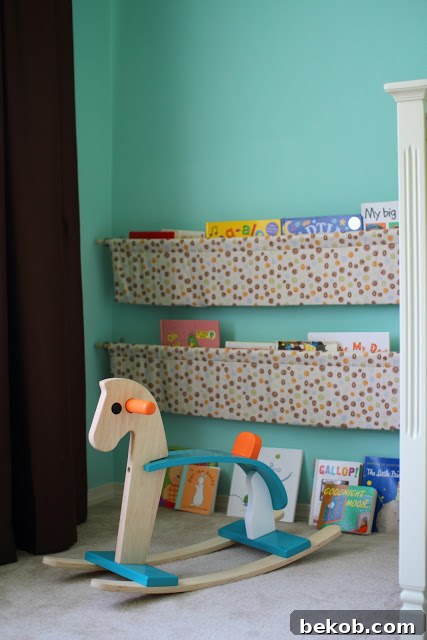
When selecting shelves or storage units, always consider your children’s height. For toddlers and young children, low shelves, bins on the floor, or wall-mounted book slings at eye level are perfect. This allows them to choose books independently. For preschoolers, front-facing book displays are a game-changer. Seeing the covers of books, rather than just the spines, makes it much easier for young readers to identify their favorites and discover new ones, transforming book selection into a visual adventure.
Protecting Treasured Books:
We all have those special books – perhaps heirloom copies from your own childhood, limited editions, or pop-up books that are delicate. While accessibility is key for everyday reads, it’s wise to keep these precious items slightly out of immediate reach of little hands. Place them on a higher shelf, in a special display case, or in a designated box that can be brought down for supervised reading sessions. This protects them from accidental damage while still making them available for shared enjoyment, turning these books into an event rather than just another item on the shelf.
3. Categorize for Clarity: A System That Works
Once you’ve decluttered and ensured accessibility, the next step in organizing children’s books is to create a sensible categorization system. This doesn’t need to be as rigid as a library’s Dewey Decimal System, but a logical grouping can significantly enhance the reading experience, making it easier for children (and parents!) to find specific books or explore new genres.
Popular Categorization Methods:
- By Theme or Genre: This is particularly effective for younger children who might gravitate towards certain topics. Create categories like “Animal Stories,” “Fairy Tales,” “Adventure Books,” “Science & Nature,” “Bedtime Stories,” or “Holiday Books.” This helps kids quickly find books aligned with their current interests.
- By Reading Level/Age: For slightly older children, grouping by reading level (e.g., “Early Readers,” “Picture Books,” “Chapter Books for Ages 6-8”) can be very helpful. This system supports their developmental stage and helps them choose books that are appropriately challenging.
- By Author or Series: If your child is a fan of a particular author or enjoys collecting books from a specific series (like Magic Tree House or Pete the Cat), grouping these together makes sense.
- Color-Coding: A visually appealing and surprisingly effective method, especially for younger children. Assign a different color sticker (like these colorful stickers) to the spine of books belonging to a certain category (e.g., red for animal books, blue for fantasy). This makes tidying up a fun matching game and helps kids identify categories quickly.
Implementing Your Categorization System:
To make your system effective, utilize various storage solutions:
- Labeled Bins or Boxes: Smaller plastic bins or sturdy cardboard boxes are excellent for holding categorized books. Label them clearly with words or even pictures for non-readers (e.g., a picture of an animal for “Animal Stories”).
- Shelf Dividers: Use simple shelf dividers to separate categories on a larger bookshelf.
- Stickers or Washi Tape: As mentioned, color stickers on the spine can be a subtle yet effective way to categorize.
The benefits extend beyond just neatness; categorization helps children develop early literacy skills, learn about different genres, and fosters a sense of order. It also makes “clean up time” much more manageable as everyone knows exactly where each book belongs.
4. Designate a Home for Library Books: Avoid Late Fees and Lost Treasures
One of the most common organizational headaches for families is the accidental mixing of library books with personal collections. This often leads to frustrating searches, overdue fines, and occasionally, lost books. Establishing a dedicated system for library books is a simple yet incredibly effective strategy that saves time, money, and stress.
The “Why” Behind a Separate Spot:
- Preventing Late Fees: A clear system drastically reduces the chances of overdue returns.
- Avoiding Loss: Library books are easily identifiable when kept separate, preventing them from being misplaced or accidentally kept.
- Teaching Responsibility: It helps teach children the importance of borrowed property and community resources.
- Streamlined Returns: When it’s time to head to the library, all borrowed items are in one place, ready to go.
Simple Solutions for Your Library Book Hub:
The key is to designate a single, consistent spot in your home for all borrowed books. This could be:
- A specific basket or canvas bag solely for library books.
- A dedicated shelf or cubby, perhaps near the front door or in the mudroom.
- A specific tote bag that always lives by the door and is used exclusively for library runs.
Make it a family rule: any book brought home from the library goes directly into this designated spot. When you’re ready for your next library visit, simply grab the entire basket or bag. Involve your children in this process, explaining why it’s important to keep library books separate and return them on time. This instills a sense of responsibility and respect for shared resources.
5. Involve Your Children: Building Ownership and Responsibility
Any organizational system, no matter how perfectly designed by an adult, will falter if the primary users aren’t on board. This is especially true for children’s books. Involving your children in the organizing process is not just about getting help; it’s about empowering them, teaching valuable life skills, and ensuring the long-term success of your system.
Benefits of Kid Involvement:
- Ownership and Motivation: When children help create a system, they feel a sense of ownership. This significantly increases their motivation to maintain it.
- Develops Life Skills: Organizing teaches sorting, categorizing, decision-making, and responsibility – skills transferable to other areas of their life like toys, clothes, and school supplies.
- Fosters Independence: They learn to locate and return books independently, boosting their confidence.
- Problem-Solving: Discussing where things should go encourages critical thinking and collaboration.
How to Involve Them:
Make the organizing process a fun, collaborative activity, not a chore:
- Decision Making: Ask their input on categories. “Do you want to group all your animal books together, or by author?”
- Sorting and Grouping: Let them sort books into piles. Even young children can help put books in the “animal” bin or the “fairy tale” bin.
- Labeling: Have them draw pictures for labels or help write the words.
- Decorating: Let them decorate storage bins or the reading nook area.
- Daily Maintenance: Regularly remind them (gently!) to put books back in their designated spots after reading. Make it part of the tidy-up routine before dinner or bedtime.
By making them active participants, you’re not just organizing books; you’re cultivating responsible, organized individuals who value their belongings and the joy of reading.
Beyond the Basics: Advanced Organization Tips for Children’s Books
Once you’ve mastered the fundamental organization principles, you might consider incorporating more advanced strategies to maximize space and enhance your child’s reading experience.
- Vertical Storage Solutions: Look upwards! Wall-mounted book ledges, sling shelves, or even spice racks can be repurposed to store books vertically, taking up minimal floor space while displaying covers attractively. This is particularly useful in smaller rooms or for creating dedicated reading corners.
- Multi-functional Furniture: Invest in furniture that doubles as book storage. Storage benches with lift-up lids, ottomans with hidden compartments, or beds with built-in bookshelves can be incredibly efficient, providing seating or sleeping space alongside ample book storage.
- Consider Digital Alternatives: While physical books are irreplaceable for many, e-books and audiobooks can significantly reduce physical clutter. Integrating a tablet with a curated selection of digital books or an audiobook subscription service can diversify your child’s reading options without adding to your tangible collection.
- Create a Dedicated Reading Nook: Beyond just storage, think about the environment. A cozy reading nook can transform book time into a special ritual. Soft pillows, a comfortable blanket, good lighting, and an easily accessible selection of books can encourage hours of reading and imagination. If you’re looking for inspiration, here are 4 Steps to a Great Kids’ Reading Nook.
- Regular Maintenance Schedule: Organizing is not a one-time event. Schedule a brief, regular check-in (perhaps weekly or monthly) to ensure books are in their correct spots, and to catch any new clutter before it accumulates. This consistent effort will keep your system running smoothly.
Whether you’re still building your child’s library or looking to expand it, here are some excellent suggestions for essential children’s books for ages 1-3 and ages 4-8, helping you curate a collection that educates and delights.
Organizing children’s books may seem like a daunting task, but by following these strategies, you can transform a chaotic pile into an inviting, accessible, and stimulating home library. A well-organized book collection reduces stress for parents, fosters independence in children, and most importantly, ignites a passion for reading that will last a lifetime. Start today, and watch your children’s love for books blossom in their beautifully organized space!
Featured image courtesy of {Smith} Peas in a Pod.