
Harvest Fresh Flavors: Your Ultimate Guide to Growing Edible Plants Indoors
Do you dream of fresh, homegrown produce but lack a sprawling backyard or abundant outdoor space? Think again! Indoor gardening is a thriving trend that allows enthusiasts of all skill levels to cultivate delicious herbs, fruits, and vegetables right inside their homes. Whether you reside in an apartment, a condo, or simply face strict homeowner association regulations on outdoor gardens, transforming your indoor space into a vibrant edible oasis is entirely achievable. This comprehensive guide will show you how to nurture a variety of popular plants, typically grown outdoors, and adapt them to flourish beautifully within your indoor environment, ensuring a continuous supply of fresh ingredients for your culinary adventures. Embracing indoor gardening is not just a hobby; it’s a step towards sustainable living, offering convenience, cost savings, and the immense satisfaction of harvesting your own food, regardless of the season or external climate conditions. With a little creativity, proper planning, and the right approach, your green thumb can indeed yield bountiful, edible rewards.
The Benefits of Indoor Edible Gardening
Beyond the simple joy of watching something grow, cultivating edible plants indoors offers a myriad of advantages. Imagine stepping into your kitchen and plucking fresh basil for your pasta, crisp lettuce for your salad, or a ripe tomato for your sandwich, all grown just steps away. This level of freshness is unparalleled and dramatically enhances the flavor and nutritional value of your meals. Furthermore, indoor gardening provides a year-round growing season, protecting your plants from harsh weather, pests, and diseases that often plague outdoor gardens. It’s an empowering way to gain more control over your food source, reduce your grocery bill, and minimize your carbon footprint. For urban dwellers, it’s a practical solution to space constraints, transforming windowsills, balconies, or even dedicated grow areas into productive farms. The therapeutic act of gardening itself, caring for living things, can also be a wonderful stress reliever and a rewarding pastime for anyone seeking a deeper connection with nature, even from within city walls.
Essential Tips for Successful Indoor Edible Gardens
Before you dive into planting, understanding the fundamental needs of indoor plants is crucial for their success. Unlike their outdoor counterparts, indoor edibles rely entirely on you to provide their ideal environment. Here’s what you need to consider:
- Light: This is arguably the most critical factor. Most edible plants require at least 6-8 hours of direct sunlight per day. South-facing windows are often ideal. If natural light is insufficient, investing in grow lights (LEDs are energy-efficient) is a wise decision. Plants like leafy greens and herbs can thrive under less intense light, while fruiting plants like tomatoes and peppers demand more.
- Soil: Always use a high-quality potting mix specifically formulated for container gardening. Avoid using garden soil, which can compact too much and introduce pests. A good potting mix offers excellent drainage and aeration while retaining adequate moisture.
- Pots and Drainage: Choose pots with drainage holes at the bottom to prevent waterlogging, which can lead to root rot. Terra cotta pots allow for better air circulation, while plastic pots retain moisture longer. The size of the pot should be appropriate for the mature size of the plant’s root system.
- Watering: Consistency is key. Water thoroughly until water drains from the bottom of the pot. Allow the top inch or two of soil to dry out before watering again, as overwatering is a common killer of indoor plants. Factors like humidity, temperature, and pot material will influence watering frequency.
- Temperature and Humidity: Most edible plants prefer temperatures between 65-75°F (18-24°C). Avoid extreme fluctuations. Indoor air can often be dry, especially in winter. Some plants, particularly tropical fruits, might benefit from increased humidity, which can be achieved with a pebble tray, regular misting, or a small humidifier.
- Fertilization: Potting soil provides initial nutrients, but these deplete over time. Begin fertilizing a few weeks after planting with a balanced, organic liquid fertilizer diluted to half strength, typically every 2-4 weeks during the growing season.
- Pollination: For many fruiting plants (like tomatoes, peppers, and citrus), natural pollination by wind or insects isn’t available indoors. You may need to manually pollinate by gently shaking the plant or using a small brush to transfer pollen between flowers.
- Pest Management: Indoor plants are not immune to pests. Inspect your plants regularly for signs of aphids, spider mites, or fungus gnats. Treat promptly with organic solutions like neem oil or insecticidal soap.
Considering Grow Lights for Optimal Growth
For many indoor gardeners, especially those without abundant natural light, grow lights are an indispensable tool. They provide the full spectrum of light that plants need for photosynthesis, encouraging robust growth, flowering, and fruiting. LED grow lights are popular for their energy efficiency, long lifespan, and customizable spectrums. When choosing a grow light, consider the specific needs of your plants (some require more intense light than others), the coverage area, and your budget. Proper placement and a timer can ensure your plants receive a consistent and adequate light cycle, mimicking natural daylight hours.
1. Avocados: A Tropical Treat for Your Indoor Garden
While it’s true you can sprout an avocado seed in water as a fun experiment, these plants rarely produce edible fruit. To harvest your own avocados, you’ll need to cultivate a dwarf avocado tree. These compact varieties are specifically bred for smaller spaces and can still reach impressive heights, often up to 10 feet, requiring tall ceilings or careful pruning. Plant your dwarf avocado tree in a very large pot—think 15-20 gallons or more—to accommodate its extensive root system. A well-draining potting mix, ideally with some sand incorporated at the bottom for enhanced drainage, is essential. Avocado trees thrive with regular watering, but they absolutely detest soggy soil, which can lead to root rot. Allow the top few inches of soil to dry out completely between waterings. They require abundant sunlight, ideally 6-8 hours of direct light daily, so a bright south-facing window or supplemental grow lights are crucial. With proper care and patience, your indoor avocado tree can eventually reward you with a bounty of creamy, homegrown fruit.
2. Carrots: Rooting for Indoor Success
Growing carrots indoors is a rewarding experience, offering sweet, crisp roots right from your windowsill. While they require a bit of depth, they are surprisingly unfussy. Choose a window box or a deep pot that is at least 12-18 inches long and 8-12 inches deep to allow the roots ample space to develop without being stunted. Fill your container with a loose, well-draining potting mix. Plant carrot seeds about half an inch deep and 2-3 inches apart. Keep the soil consistently moist but never waterlogged; a gentle, consistent watering schedule is ideal for germination and growth. Seeds typically germinate within 1-2 weeks. Once the seedlings emerge, thin them to 3-4 inches apart to give each carrot sufficient room to grow plump. Carrots need at least 6 hours of direct sunlight daily to produce substantial roots. Within 60-80 days, depending on the variety, you’ll be able to gently harvest your fresh, vibrant indoor carrots.
3. Tomatoes: Sun-Kissed Flavor in Your Living Room
Indulging in fresh, ripe tomatoes grown right in your home is a truly delightful experience. For indoor cultivation, consider dwarf or “bush” varieties, which are more compact and better suited for pots. Start with a 6-inch pot for each plant, using a high-quality starter mix. Plant your seeds about 1/4 inch deep. Keep the soil consistently moist but never soggy, ensuring proper drainage. Once seedlings are robust enough, transplant them into larger pots (10-12 inches in diameter for a single plant) filled with a rich potting mix. Tomatoes are sun-lovers, requiring at least 6-8 hours of direct sunlight per day, making a sunny window or powerful grow lights essential. While they crave light, they don’t appreciate intense heat directly against the glass, which can scorch leaves, so monitor their placement carefully. As your tomato plant grows, it will likely need staking or a cage to support its stem and prevent breakage under the weight of ripening fruit. Remember to manually pollinate flowers by gently tapping them or using a small brush to transfer pollen to encourage fruit set.
4. Mushrooms: The Mycelial Magic of Indoor Cultivation
For a truly unique indoor growing experience, consider cultivating mushrooms. Unlike plants, mushrooms don’t require light, making them perfect for shadier spots like a closet or a shelf away from windows. The easiest way to start is with an all-in-one mushroom growing kit, which typically comes pre-inoculated with spores and requires minimal effort—often just regular misting. Alternatively, for a more hands-on approach, you can inoculate a substrate like straw or sawdust with mushroom spores. One creative method involves using a laundry basket lined with a breathable material, filled with inoculated straw, and then kept in a dark, humid environment until the mycelium fully colonizes the substrate. Oyster mushrooms, shiitake, and lion’s mane are popular varieties for indoor cultivation due to their relative ease of growth. Maintaining high humidity and cool temperatures (usually between 55-70°F or 13-21°C) is crucial for successful fruiting. Within a few weeks, you can expect to harvest fresh, earthy mushrooms for your culinary creations.
5. Green Onions: Effortless Re-growth from Scraps
Green onions (scallions) are arguably one of the simplest and most satisfying vegetables to grow indoors, even for the most novice gardener. The best part? You can start them from the discarded white ends of green onions purchased from the grocery store! Simply take the root end of a leftover green onion, ensuring about an inch of the white bulb is still attached, and place it upright in a small glass or jar. Fill the glass with just enough water to cover the roots, about an inch deep. Place the glass on a sunny windowsill. Change the water daily to prevent mold and ensure a fresh supply of nutrients. Within about a week, you’ll notice new green shoots rapidly emerging. Once the shoots have doubled in size or reached a few inches tall, you can either continue growing them in water (changing it every few days) or transplant them into a small pot filled with potting soil. Planting them in soil encourages more robust and continuous growth. Harvest by snipping off the green tops as needed, and they will continue to regrow, providing you with a continuous supply of fresh scallions for weeks!
6. Peppers: Spice Up Your Indoor Garden
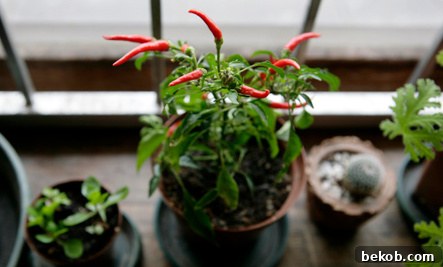
Peppers, whether sweet bell varieties or spicy chilies, can thrive indoors if given the right conditions. They are warmth and sun-loving plants, so a bright, south-facing window that receives at least 6-8 hours of direct sunlight is crucial. If natural light is limited, supplemental grow lights are highly recommended. Varieties like banana peppers, cherry peppers, and smaller chili types (e.g., jalapeños, habaneros) tend to perform best indoors due to their more compact growth habits. Peppers require adequate room for their root system to develop, so use a pot that is at least 3-5 gallons (12-20 liters) in size, with good drainage. While you can start from seeds, beginning with a small sprout or seedling purchased from a nursery can significantly simplify the process and hasten your first harvest. Maintain consistent soil moisture, but avoid overwatering. Fertilize regularly during the growing season. Like tomatoes, peppers often require manual pollination indoors; gently shake the plant or use a small brush to transfer pollen from flower to flower to encourage fruit set. With proper care, you can enjoy a continuous supply of fresh, homegrown peppers.
7. Radishes: Quick and Easy Root Vegetables
Radishes are an excellent choice for beginner indoor gardeners and those looking for a quick harvest. Their rapid growth cycle means you can enjoy fresh, peppery roots in just a few weeks! Radishes are not particularly fussy and adapt well to container life. Choose a container that is at least 6 inches deep and wide, filled with a loose, well-draining potting mix. Plant seeds about half an inch deep and an inch apart. Radishes prefer warm conditions, so place their container near a sunny window where they can receive at least 4-6 hours of direct sunlight daily. However, on particularly hot days, it’s wise to move them slightly away from direct intense heat to prevent them from bolting (going to seed prematurely). Keep the soil consistently moist. In optimal conditions, radishes can be ready for harvest in as little as three to four weeks, allowing you to enjoy multiple successive plantings throughout the indoor growing season. Gently pull them from the soil when their roots are about 1 inch in diameter.
8. Salad Greens: Fresh, Crisp Harvests at Your Fingertips
Growing your own salad greens indoors offers an endless supply of fresh, crisp leaves for salads, sandwiches, and garnishes. Varieties like loose-leaf lettuce, spinach, arugula, and mesclun mix are ideal for small spaces and container gardening. You can start them from seeds or small “starts” purchased from a nursery. Use wide, shallow planter boxes or rectangular containers that allow for good drainage. If planting seeds, sow them about 1/4 inch deep and an inch apart; for starts, space them roughly 4 inches apart, gently massaging the roots before planting to encourage growth. Keep the soil continually moist but ensure it’s never waterlogged, as this can lead to fungal issues. Salad greens prefer cooler temperatures (around 60-70°F or 15-21°C) and can tolerate slightly less direct sunlight than fruiting plants, needing about 4-6 hours of moderate light. A north or east-facing window might suffice, or supplemental grow lights can ensure lush growth. Harvest by picking the outer leaves, allowing the inner leaves to continue growing, which provides a “cut-and-come-again” harvest for weeks.
9. Lemons: Bringing Citrus Sunshine Indoors
Cultivating a lemon tree indoors brings not only the promise of tangy fruit but also a wonderful fragrance to your home. Dwarf lemon varieties are best suited for indoor environments, and with proper care, you might even harvest fruit in their first year. Lemon trees are true sun worshippers, demanding at least 8-12 hours of direct sunlight daily. A south-facing window is essential, and supplemental grow lights are often necessary, especially during shorter winter days. Plant your dwarf tree in a pot that is slightly larger than its root ball, ensuring it has excellent drainage. Use a specialized citrus potting mix, which typically has a slightly acidic pH and good aeration. Water your lemon tree daily, but be extremely careful not to oversaturate the soil; allow the top inch or two to dry out between waterings. Regular fertilization with a high-nitrogen citrus-specific fertilizer is crucial during the growing season. Lemon trees will also benefit from regular misting or a humidity tray, especially in dry indoor climates. Watch for pests like spider mites, and be prepared to hand-pollinate the flowers for fruit production.
10. Mandarin Oranges: Sweet Rewards from Your Container Garden
Like lemons, mandarin orange trees can be successfully grown indoors, offering sweet, juicy fruit and a delightful aroma. Opt for dwarf varieties, as they are much more manageable for container growing. Mandarin trees require spacious pots, ideally at least 15-20 gallons, to accommodate their robust root systems. Fill the pot with a rich, well-draining potting mix. These trees are fervent sun-lovers, needing a minimum of 8-12 hours of bright, direct sunlight each day. Place them in your sunniest location, preferably a south-facing window, and consider investing in powerful grow lights. To ensure even growth and fruit production, rotate the pot regularly as you water it, allowing all sides of the tree to receive equal sun exposure. Consistent watering is important, but always ensure excellent drainage to prevent root issues. Mandarins are heavy feeders, so fertilize with a citrus-specific fertilizer during the growing season. As the tree matures, its root system will likely expand significantly; when roots begin to emerge from the drainage holes, it’s a clear sign that it’s time to transplant your mandarin tree into a container at least 2 inches larger in diameter to provide continued space for growth.
Ready to Start Your Indoor Edible Garden?
From the zesty tang of a homegrown lemon to the crisp bite of fresh lettuce, cultivating edible plants indoors is a profoundly satisfying endeavor. It’s an accessible way to enjoy fresh, organic produce year-round, regardless of your living situation or the climate outside your door. With the right knowledge and a little dedication, your indoor space can become a thriving hub of culinary delights. Experiment with different plants, observe their needs, and soon you’ll be harvesting a bounty of fresh flavors right from your home. The journey of growing your own food is incredibly rewarding, connecting you more deeply with nature and providing delicious, healthy ingredients for every meal.
For more detailed insights into a wider variety of indoor plants, herbs, and trees, explore resources like Care2’s guide to easy indoor vegetable and herb gardening and HowStuffWorks’ extensive list of plants to grow in containers without a garden. You can also find inspiring ideas for outdoor edible gardens on Remodelaholic’s 25 edible garden ideas.
Featured image via care2
Title image via Better Homes and Gardens
Kimberly Mueller is the creative mind behind bugaboo, mini, mr & me, a blog dedicated to her various creative pursuits. She enjoys sharing kid crafts, sewing projects, recipes, upcycled items, photography, and free printable gift tags. When not immersed in her creative endeavors, she cherishes time with her husband, manages her three energetic children, and strives to keep her home in order. You’ll often find her with a glue gun in one hand and spray paint in the other. Kimberly is also passionate about writing, reading, music, singing (mostly in the shower), and the color yellow. She is the author of the craft book “Modern Mod Podge” and can be followed on Facebook, Pinterest, Bloglovin’, and Instagram. You can reach her via email at: bugabooblog(at)yahoo.com.