
Choosing the Perfect Paint Colors for Your Bathroom: An Expert Guide
Hello, fellow home enthusiasts! It’s Cyndy from The Creativity Exchange, and I’m thrilled to be back this month to share another carefully curated paint color palette, this time focusing on one of the trickiest yet most rewarding rooms in your home: the bathroom.
Last month, we explored a variety of trending paint colors for kitchen and bathroom cabinets. Building on that foundation, this month we’re diving into the equally important world of wall colors specifically for bathrooms. You’ll find that many of the cabinet colors we discussed previously would harmonize beautifully with the wall colors presented today, creating a cohesive and stylish look. Throughout this guide, you’ll see inspiring images, each accompanied by the name and brand of the paint color featured.
Navigating the Challenges of Bathroom Paint Colors
Choosing the perfect paint color for your bathroom walls is notoriously challenging. Unlike other rooms in your home that often benefit from abundant natural light, bathrooms frequently have limited or no windows. This reliance on artificial lighting significantly alters how a paint color appears. A seemingly safe and neutral warm gray, for instance, can instantly transform into an unexpected peach or mauve hue under specific artificial bathroom lights, leading to a disappointing outcome.
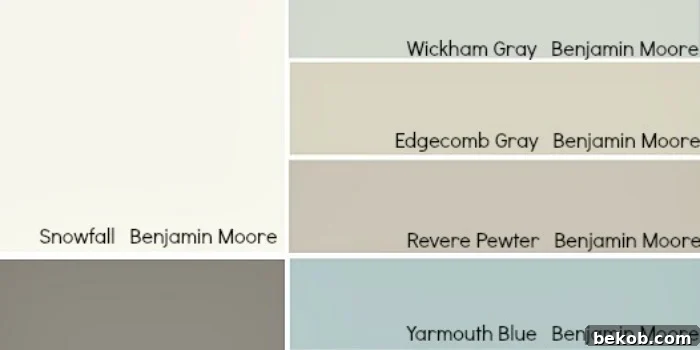
Yarmouth Blue by Benjamin Moore
The Critical Role of Lighting in Color Perception
To truly understand why bathroom paint colors are so tricky, we need to consider the interplay of light and color. Natural daylight offers a full spectrum of light, allowing colors to appear true to their shade. Artificial lighting, however, emits a narrower spectrum, which can drastically shift a color’s perceived undertones. The Kelvin temperature of your light bulbs plays a huge role: warmer lights (around 2700K-3000K) tend to bring out red and yellow undertones, while cooler lights (3500K-5000K+) can accentuate blue and green undertones. This is precisely why a color that looks stunning in a brightly lit showroom might appear completely different in your windowless bathroom.
Essential Tips for Selecting Bathroom Paint Colors
Given these challenges, a strategic approach is key to choosing bathroom paint colors you’ll love for years to come. Here are my top recommendations:
1. Test Colors Directly in Your Bathroom’s Lighting
This is perhaps the most crucial step. Never select a paint color based solely on how it looks on a small swatch in a different room or under different lighting conditions. Always bring paint cards and samples directly into your bathroom. Observe them at various times of the day – morning, afternoon, and especially at night with your specific artificial lighting turned on. This allows you to see how the color interacts with the light sources you actually use, revealing any unexpected undertones.
Edgecomb Gray by Benjamin Moore
2. Let Your Bathroom Flooring Guide Your Choice
If you’re unsure where to begin, your bathroom flooring provides an excellent starting point. The floor is a major fixed element, and choosing wall colors that complement and blend seamlessly with it will create a cohesive and harmonious space. Consider the undertones of your tile or vinyl – do they lean warm (yellow, red) or cool (blue, gray)? By selecting wall colors that share or softly contrast these undertones, you ensure that the entire room feels pulled together, preventing colors from clashing once painted.
Imperial Gray by Benjamin Moore
3. Incorporate Existing Fixtures and Finishes
Beyond flooring, take into account other permanent elements in your bathroom. The color of your vanity, countertops, shower tiles, and even your metal fixtures (chrome, brushed nickel, oil-rubbed bronze, matte black) will all interact with your chosen wall color. For example, a cool gray paint might enhance the crispness of chrome fixtures, while a warmer greige could beautifully complement bronze hardware.
4. Draw Inspiration from Popular Bathroom Colors and Professional Designs
A smart trick for discovering reliable bathroom colors is to observe what’s popular among home builders, designers, and architects. These professionals often select colors that are known to perform well under artificial lighting. Websites like Houzz are invaluable resources. By browsing countless bathroom designs, you’ll start to notice certain colors appearing frequently. Often, the paint color is tagged within the image details or mentioned in the comments section. You can also search for your favorite paint brands within the bathroom category to see their most popular choices.
Dovetail by Sherwin Williams
5. Utilize the Poster Board Method for Accurate Samples
Once you’ve narrowed down your choices to a few contenders, invest in sample pots of paint. Instead of painting directly onto your wall, which can be difficult to cover later, paint two generous coats onto a large poster board (at least 2’x2′). Allow it to dry completely. Then, tape the poster board to different walls in your bathroom. This method provides several advantages:
- It prevents the existing wall color from influencing your perception of the new sample.
- You can easily move the board around to see how the color looks in various spots, under different lighting conditions.
- It gives you a much larger visual representation than a small swatch, making it easier to identify any crazy hues or undertones that might jump out.
Snowfall by Benjamin Moore (cabinets and wall)
6. Adjusting Shades for Perfection
The poster board trick can also help you fine-tune the exact shade you need. If your sample color feels too dark or too light, but you love the undertone, don’t abandon it! Often, the solution is as simple as moving one shade up or one shade down on the same paint color strip. This ensures you maintain the desired underlying hue while adjusting the lightness or darkness to suit your space perfectly.
Revere Pewter by Benjamin Moore
7. Embrace Boldness and Balance with White Trim
Bathrooms, especially powder rooms, are often ideal spaces to experiment with bolder, more expressive colors. Since they are smaller and used for shorter periods, you can afford to be a little more adventurous. A rich, deep color can create a dramatic, luxurious feel. To prevent bold colors from overwhelming the space, balance them with crisp white trim, baseboards, and ceilings. This classic combination provides a fresh contrast and defines the architectural details of the room. I particularly adore this deep, beautiful hue called Blue Heron by Benjamin Moore:
Blue Heron by Benjamin Moore
Popular Bathroom Color Palettes to Consider
While personal preference is paramount, certain color families consistently perform well in bathrooms due to their calming qualities or adaptability to various lighting conditions:
- Calming Blues and Greens: Shades like Yarmouth Blue and other soft aquas or muted greens evoke a spa-like tranquility, perfect for relaxation. They often feel fresh and clean.
- Versatile Greiges and Grays: Colors such as Edgecomb Gray, Revere Pewter, Imperial Gray, and Dovetail offer incredible versatility. They provide a sophisticated neutral backdrop that can lean warm or cool depending on the light and surrounding elements, making them excellent choices for almost any bathroom style.
- Crisp Whites and Off-Whites: A classic choice for brightness and cleanliness. Snowfall is a beautiful example. Remember that whites have undertones too (warm, cool, creamy), so always sample to ensure it’s not too stark or too yellow for your space.
Final Thoughts on Your Bathroom Color Journey
Choosing bathroom paint colors can indeed be a journey filled with careful consideration, but it’s one that ultimately leads to a space you’ll love. The most important takeaway remains this: always choose your colors in the very space they will inhabit, under the specific lighting conditions of that room. This diligent approach is your safest bet for a successful and beautiful outcome.
For more bathroom paint color palettes and inspiration, be sure to check out this bathroom and cabinet color palette I shared previously on my blog. Additionally, I’ve curated a comprehensive “Pick a Paint Color” board on Pinterest here, featuring over 400 rooms with their exact paint color names and brands listed for your convenience.
Thank you so much for stopping by and engaging with this month’s color discussion! I’ll be back next month with another exciting paint color palette. And as always, a huge thank you to Cassity for graciously providing me the opportunity to share my passion with your wonderful readers each month!
Cyndy
——————————————-
Explore More Inspiring Paint Color Palettes by Cyndy:
Don’t forget to check out these other fantastic color palettes and guides Cyndy has put together for us:
Cabinet Paint Color Trends
Tips for Choosing Bold and Bright Paint Colors
An Easy Paint Color Strategy for the Whole Home
Transitional Paint Colors for Balanced Warm/Cool Tones
2014 Paint Color Trends