
Unlocking Your Home’s Potential: A Masterclass in Architectural Trim with Autumn from Design Dump
We’re absolutely thrilled to welcome a very special guest to our blog today: Autumn from Design Dump. For those unfamiliar with her work, Autumn is nothing short of a design visionary. My first encounter with her talent was years ago, when I stumbled upon a feature of a living room remodel she had masterfully executed. The space was utterly captivating, leaving me in awe, especially the exquisite coffered ceiling that truly transformed the room. Intrigued, I reached out to her with a flurry of questions about that incredible ceiling, and true to her kind nature, she graciously explained every detail I was curious about. Her generosity and expertise were immediately apparent, and it’s a privilege to feature her insights here today.
Autumn brings an unparalleled perspective to the world of home renovation and interior design. Not only is she an immensely talented designer, but her husband is also a highly skilled contractor. This dynamic partnership is, without exaggeration, a match made in heaven for anyone passionate about creating beautiful, functional, and structurally sound homes. Their collaborative genius allows them to tackle projects from concept to flawless execution. They are currently embarking on the exciting journey of finding house number seven, a testament to their continuous passion for transforming spaces. When I asked Autumn to share a topic close to her heart, something she genuinely loves from her extensive experience across multiple homes, her answer was immediate and passionate: architectural trim. And as you read on, you’ll undoubtedly come to share her enthusiasm for this often-underestimated design element.
A Warm Welcome from Autumn: My Profound Love for Architectural Trim
Hi everyone! I’m Autumn, and I am beyond delighted and incredibly grateful to Cassity for extending this wonderful invitation to guest post here at Remodeliholic. This marks my very first guest post – a true milestone for a self-proclaimed blogging rookie! – and I am genuinely honored that it’s with such an inspiring and engaged community. When I considered what topic I could share that would resonate deeply with my design philosophy and passion, one element immediately came to mind: TRIM! It’s an integral part of every home I design and renovate, an architectural detail I simply cannot get enough of, and if you follow my own blog, you’ll frequently see me celebrating my profound love for it. Trim is more than just decorative; it’s the soul of a space.
The Indispensable Role of Architectural Moldings in Creating Character and Depth
A recurring concern I hear from many clients is that their homes feel soulless, lacking in distinctive character, warmth, or a unique personality. They describe their spaces as generic, unfinished, or simply uninspiring. While interior design offers a multitude of strategies to introduce texture, enhance spatial proportions, and build intrinsic design interest, one of the most consistently effective and transformative methods is the thoughtful addition of architectural moldings. Trim isn’t merely an ornamental afterthought; it’s a foundational element capable of elevating a room from mundane to magnificent, infusing it with elegance, a sense of history, and a bespoke quality often missing in modern, mass-produced homes. It’s about creating visual depth and hierarchy, subtly guiding the eye, and providing a level of finish that paint or furniture alone cannot achieve. These architectural details are what truly differentiate a house from a home.
Elevating Your Ceilings: The Transformative Power of Crown Molding
The addition of crown molding is a timeless and classic solution that delivers substantial visual impact without requiring overly complex installation. It serves as a beautiful transition between the wall and ceiling, instantly creating a polished, refined, and finished aesthetic. But for those seeking to make an even bolder and grander statement, there’s a clever technique that can amplify its effect:
In the very first house my husband and I built for ourselves nine years ago, we experimented with a technique to create the illusion of much larger, more elaborate crown molding without the exorbitant cost or complexity. We began by installing standard crown molding directly at the ceiling line. Then, approximately four inches down the wall, we added a second, smaller, and simpler piece of trim. The true magic occurred when we painted the entire wall space situated between these two trim pieces to perfectly match the color of the moldings. The result was a dramatic, multi-dimensional crown detail that gave the impression of a deep, custom-built cornice, appearing significantly more luxurious and expensive than the actual materials and effort involved. This ingenious layering technique is superb for injecting architectural gravitas into any room, whether your design preference leans towards traditional elegance, classic revival, or even a contemporary aesthetic with clean, defined lines.
Beyond this clever layering trick, selecting the appropriate style of crown molding is crucial and can dramatically influence the overall character of a room. For instance, an intricate, multi-piece, or stacked crown molding is ideal for traditional, Victorian, or formal spaces, imbuing them with a sense of grandeur. Conversely, a simpler cove, stepped, or minimalist profile can perfectly complement modern, transitional, or Scandinavian-inspired designs. Moreover, crown molding offers practical advantages; it can visually adjust ceiling heights, making a low ceiling appear higher or bringing down the perceived scale of a very tall one. It also excels at concealing minor imperfections where walls and ceilings meet, providing a seamless finish. Ultimately, investing in well-chosen and expertly installed crown molding is a powerful investment in your home’s enduring beauty, perceived value, and timeless appeal.
Framing Your Spaces: The High-Impact Design of Door and Opening Trim
Doors and the architectural openings between rooms are frequently overlooked opportunities for adding significant visual interest and defining the flow of a home. The act of adding molding or trim around these transitional elements is an incredibly effective way to produce a high-impact design feature at a surprisingly minimal cost. Think of these trims as elegant picture frames for your living spaces, meticulously defining entry and exit points with both grace and intentionality. They create a sense of passage and purpose that plain drywall edges simply cannot achieve.
Consider, for instance, the elegant trim surrounding this opening in our first home’s foyer. The total cost of materials for this specific treatment was remarkably affordable, approximately $30. We applied this tailored design over the two primary openings in our foyer, instantly elevating what would otherwise have been plain, unremarkable transitions into sophisticated architectural details. This simple yet effective addition not only imparts significant visual weight and presence but also subtly creates a psychological demarcation between rooms, suggesting a more thoughtfully designed and purposeful flow within the home. It’s a testament to how small, strategic changes can yield disproportionately grand results.
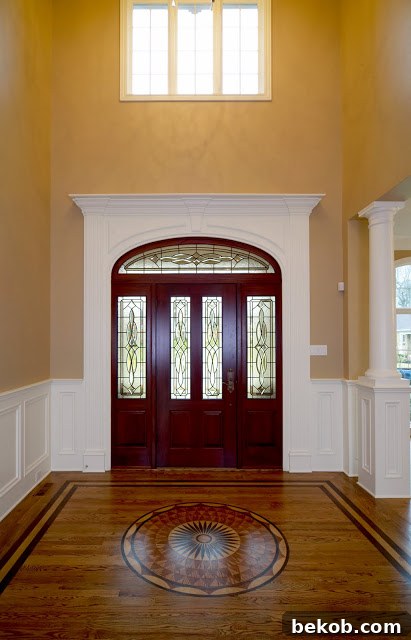
In a more elaborate and custom application, as seen in this magnificent home built by my husband, you can observe how an intricate version of door trim achieves an even more profound impact. Here, the robust and substantial trim does far more than just define the doorway; it creates significant additional mass and architectural presence. This detailing is especially critical in a space featuring a grand, two-story wall where a standard door might appear diminutive. The substantial trim meticulously balances the door’s “visual weight” against the expansive verticality of the wall, preventing the door from feeling lost or insignificant within such a vast scale. This meticulous attention to scale, proportion, and finely crafted details is what truly transforms a mere structure into a custom-designed home, unequivocally demonstrating trim’s pivotal role in harmonizing a room’s diverse elements.
Beyond Basic Borders: Creative Applications for Architectural Detail
The sheer versatility of architectural trim extends far beyond its conventional uses around ceilings, doors, and floors. These elements can be creatively employed to enhance specific features and dramatically elevate the overall ambiance of a room. Here are a few inspiring examples that showcase the endless possibilities:
In one of our custom-built homes, we ingeniously incorporated basic pilasters – essentially decorative half-columns – to elegantly frame and define the bathtub area within the master bathroom. This seemingly simple addition instantly transforms a purely functional element into a luxurious focal point, imbuing the space with a sense of classical grandeur and architectural structure. Pilasters add a profound sense of depth and a sculptural quality that a flat, unadorned wall simply cannot provide, thereby making the bathing experience feel significantly more indulgent and exquisitely refined. They speak to an era of craftsmanship and thoughtful design.
The luxurious Sanctuary Hotel on Kiawah Island in South Carolina provides an excellent masterclass in advanced trim applications. Here, large architectural openings are not only beautifully wrapped in substantial, custom trim but are further enhanced by inset louvered panels. This sophisticated treatment introduces multiple layers of texture and visual interest, skillfully creating a nuanced sense of privacy and timeless elegance while concurrently maintaining an open, airy feel. The louvered panels add a distinctive design element that speaks volumes about thoughtful craftsmanship and meticulous attention to detail, transforming a simple passage into a profound architectural statement.
Another area within the breathtaking Sanctuary Hotel brilliantly showcases the power of decorative headers. These prominent architectural features serve a dual purpose: they expertly define specific zones or alcoves within a larger, expansive space. More critically, they also strategically help to visually ‘bring down’ the often-overwhelming scale of very high ceilings, thereby fostering a more intimate, inviting, and human-scaled environment. This exemplifies a brilliant application of how trim can subtly manipulate perception, rendering even the most vast and cavernous spaces feel more approachable and comfortable, all without sacrificing their inherent grandeur or architectural integrity.
The Art of Wainscoting: Re-proportioning Spaces and Adding Classic Charm
Wainscoting stands as another incredibly versatile and historically rich form of architectural trim, capable of profoundly impacting a room’s proportions, character, and overall feel. In this custom home, once again built with meticulous craftsmanship by my husband, the foyer boasted impressive 14-foot tall ceilings. While grand, without properly scaled moldings, such a monumental height could easily feel awkward, disproportionate, or even cavernous. Observe how the skillfully installed seven-foot tall wainscoting dramatically transforms the space. By introducing a significant horizontal division at a human-centric height, it ingeniously establishes more appropriate and comfortable proportions, making the expansive foyer feel welcoming, beautifully balanced, and intimately inviting rather than overwhelming. Wainscoting, whether in a raised panel, shaker, beadboard, or board and batten style, consistently adds a layer of sophisticated elegance and traditional charm that is exceedingly difficult to replicate with mere paint or wallpaper alone.
In our own last home, the foyer initially presented a modest aesthetic, outlined only by a small piece of crown and base molding that contributed little to enhancing the entry’s character or visual impact. To truly elevate the space and bestow upon it a refined, welcoming aura, we made the decision to install wainscoting. This addition was not solely about aesthetics; it ingeniously served a clever functional purpose: it helped to seamlessly disguise an air return vent that would otherwise have been an unsightly and distracting element. Did you even notice it at first glance? If not, then we certainly accomplished our goal of perfectly integrating utility with beauty! This clever application is a powerful testament to how thoughtfully designed and strategically placed trim can subtly yet effectively solve common design dilemmas, enhancing both form and function simultaneously.
The profound impact and transformative power of architectural trim are significantly amplified when its application is carried consistently and cohesively throughout connected spaces. Given that the stairwell and the upstairs hall were prominently visible from the newly adorned foyer, we made a conscious and deliberate decision to extend the wainscoting and other complementary trim elements into these adjoining areas. This meticulous continuity is absolutely vital for cultivating a truly cohesive, high-end, and custom-designed feel throughout the entire home. What might have otherwise been a long, ordinary, and uninspired hall was gracefully transformed into an appealing, gallery-like area. This now provides a perfect backdrop for showcasing cherished family photos and creating a visual narrative that unfolds beautifully as one moves through the house. This thoughtful extension of trim ensures that every corner and passage of the home feels intentional, exquisitely finished, and beautifully appointed, reflecting a discerning eye for detail and design harmony.
The Enduring Appeal and Practicality of Architectural Trim
For me, and for a growing number of discerning homeowners, architectural trim is far more than a mere accessory; it is an absolutely essential component in crafting spaces that feel truly comfortable, deeply appealing, and genuinely custom-designed. It masterfully adds layers of depth, sophistication, and a rich historical context that flat, unadorned walls simply cannot provide. Every time my husband and I embark on a new remodel project or undertake the construction of a custom home, we actively seek out and seize opportunities to experiment with novel treatments and innovative applications of moldings. My boundless inspiration stems from a wide and diverse array of sources: drawing invaluable lessons from past successful projects, meticulously poring over countless design magazines and industry publications, and keenly observing and analyzing public spaces such as elegant restaurants, luxurious boutique hotels, and sophisticated corporate offices. The creative possibilities are truly limitless, and the immense joy lies in continuously discovering how each piece of trim can contribute to telling a unique, compelling design story within a home.
It is crucially important to understand that integrating additional trim and moldings into your home does not have to be a complex, prohibitively expensive, or overwhelming endeavor. In fact, beyond the transformative power of a fresh coat of paint, adding architectural trim stands out as one of the most accessible, budget-friendly, and profoundly effective ways to customize and elevate any space. The necessary materials are readily available at most home improvement stores, and with a reasonable amount of DIY spirit, patience, and the right tools, the transformation can be remarkably swift and satisfying. As you’ve witnessed from the diverse examples shared, the results are often nothing short of breathtaking, adding significant perceived value and unparalleled character that far outweighs the initial investment. It’s an accessible luxury that pays dividends in beauty and ambiance.
Are you now feeling inspired to cast a fresh eye upon the perhaps-naked walls, unadorned doorways, and overlooked transitions within your own home? I sincerely hope so! Architectural trim is an undeniably powerful and versatile tool in any homeowner’s design arsenal, uniquely capable of elevating the mundane into the magnificent. It is not just an expense; it is a meaningful investment in the very soul of your home, promising timeless elegance, distinctive character, and a deeply personalized touch that will be cherished and admired for countless years to come. Let trim tell your home’s story.
Ready for More Expert Design Inspiration?
Head over to Autumn’s blog, Design Dump, right now for an endless wellspring of inspiration, tips, and stunning remodels!
We guarantee you won’t regret exploring her genius!