Materials and the sequence of the job sit together on this page.
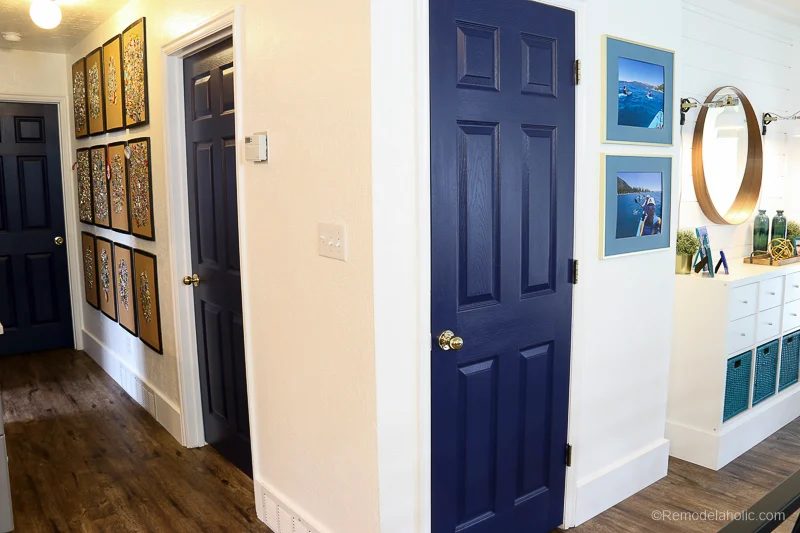
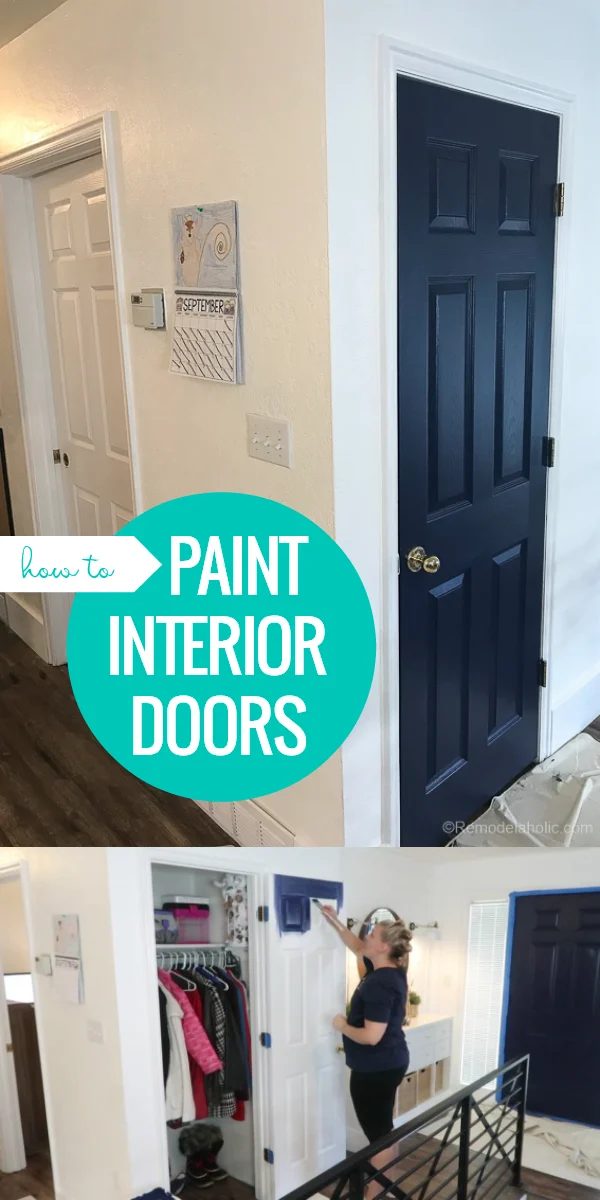
Recently we shared how we added some color to our neutral open floor plan in our Jordan House, including painting our interior doors. (We also updated a basic flat door to a wood barn door, squee!) Painting your doors is a high impact change that gives you a great bang for your buck! We shared a few door painting tips in that initial reveal of our doors, but we wanted to *really* share 26 tips for painting interior doors. So, we videoed the whole process of painting our doors navy blue and I talked about the process as we did it, sharing answers to the FAQs we get most often about painting interior doors, including why I use a brush instead of a roller and what brush I recommend using, what is the best paint for a door, how to eliminate brush strokes when painting doors, and how to paint the edge of a door.
The Process
My process doesn’t follow any one particular model — this is just what I’ve learned in our years of remodeling 7 houses and painting at least 100 doors. Over the years, I’ve adopted this method because I would rather paint my doors right the first time, even if it takes a little bit more time, than regret having a poor or drippy finish. Doing things right with Handmade takes time! Once you get into the rhythm of it, this strategy for painting doors for a smooth finish with a paintbrush doesn’t take a whole lot more time than using a roller — I painted 2 doors in about 2 hours. Thin coats of paint actually make the painting go *faster* in my opinion, because you can work more quickly with better results, without a lot of waiting for paint to dry before you can move on to the next coat. And less time cursing and trying to figure out a mistake because you loaded too much paint on to one section of the door!
Standard Doors…
The Jordan House has builder standard hollow core 6-panel doors with the faux wood grain, like many newer or remodeled houses, so this video shares both general tips for painting doors and the specific process of how to paint a 6-panel door and how to paint the faux wood grain without brush strokes. I’ve shared some of our top tips below as well, but watch the video for all 26 tips for painting interior doors. (For more info about our door color and the other added color in our main level, see the post here.)
FAQs and 26 Tips for Painting Interior Doors
Brush or roller — which is better for painting doors?
I’ve done both, and even the smoothest foam rollers still leave a little bit of texture behind. That’s why I prefer using brush, and taking the time to work the paint in the direction of the faux wood grain, like you see in the video. The improved result in the smooth finish is 100% worth the small amount of added time for this Bekob!
Follow-up question #1: How do I eliminate brush strokes while painting my doors?
I share a LOT of tips about this in the video, and it distills down to using thin coats of paint and taking the time to pay attention to the (faux) construction of the door. It’s also really important that you use a good quality brush (which doesn’t always mean the most expensive, but it also usually isn’t the cheapest option, either) and clean the paint from your brush regularly.
How often should you clean your paint brush? As often as it starts to seem like there is build-up! Even sometimes in the middle of the project when it’s a longer painting project, such as painting several doors like we did. It’s a bit of extra work to keep the brush clean, but it makes a big impact in the quest to achieve a nice smooth finish on a textured door.
Follow-up question #2: What brush should I use to paint my door?
I’m always a fan of a good quality angled brush! For walls and cutting in, a wider brush is usually better, but for paneled doors like mine, I chose an angled brush the same width as the depth of the panel. As I said above, it’s worth a few extra bucks for a good quality brush that will improve the finished product.
What is the best paint to use on interior doors?
I always always always use a satin or semigloss paint for one reason: cleaning. I’m not particularly a neatnik, but it drives me crazy when things, especially permanent fixtures like doors, get looking grimy and can’t be cleaned. Flat paint can look really nice on a door but it’s just not as durable for the hard work and cleaning that doors need to hold up to, especially in our house with two kids and the added fingerprints and wear and tear. A satin paint is more scrubbable while still having just a very slight sheen to it, and a semigloss paint will clean up really nicely as well, if you prefer a shinier finish on your doors.
How many coats of paint does a door need?
This will depend on your paint, brush, and paint color but I always plan on at least 2 coats, and often end up doing 3 coats just to get a really good coverage and smooth finish while using thin coats.
What other questions do you have about painting doors? We answered a lot more questions in the video, and drop us a comment with your questions! We also did an entire series about Handmade doors and updating doors — see the entire Shut The Front Door Handmade series here.
You’ll also like:
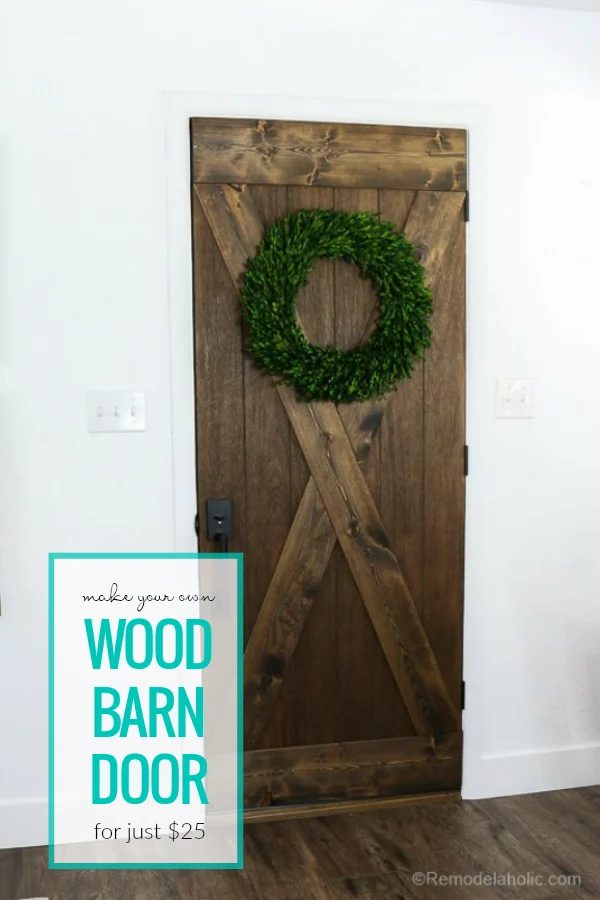
Turn a flat panel door into a wood barn door for just $25
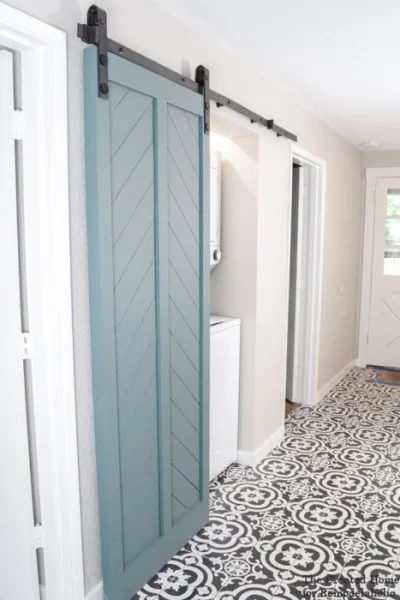
Create a sliding barn door from an interior door
10 best black paint colors for doors
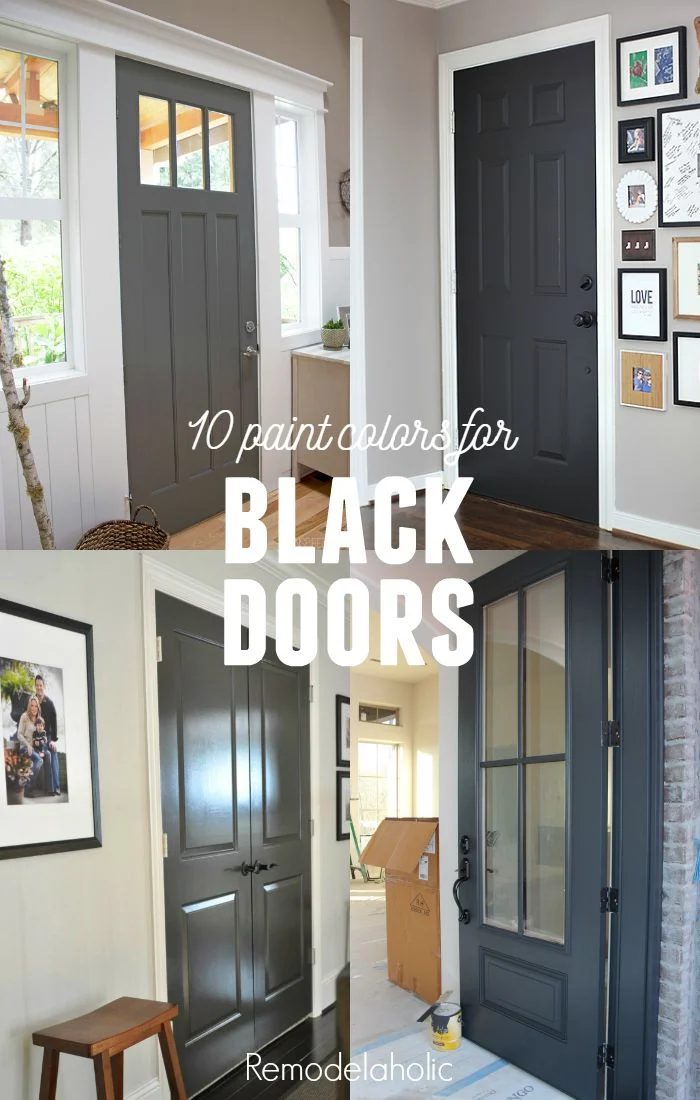
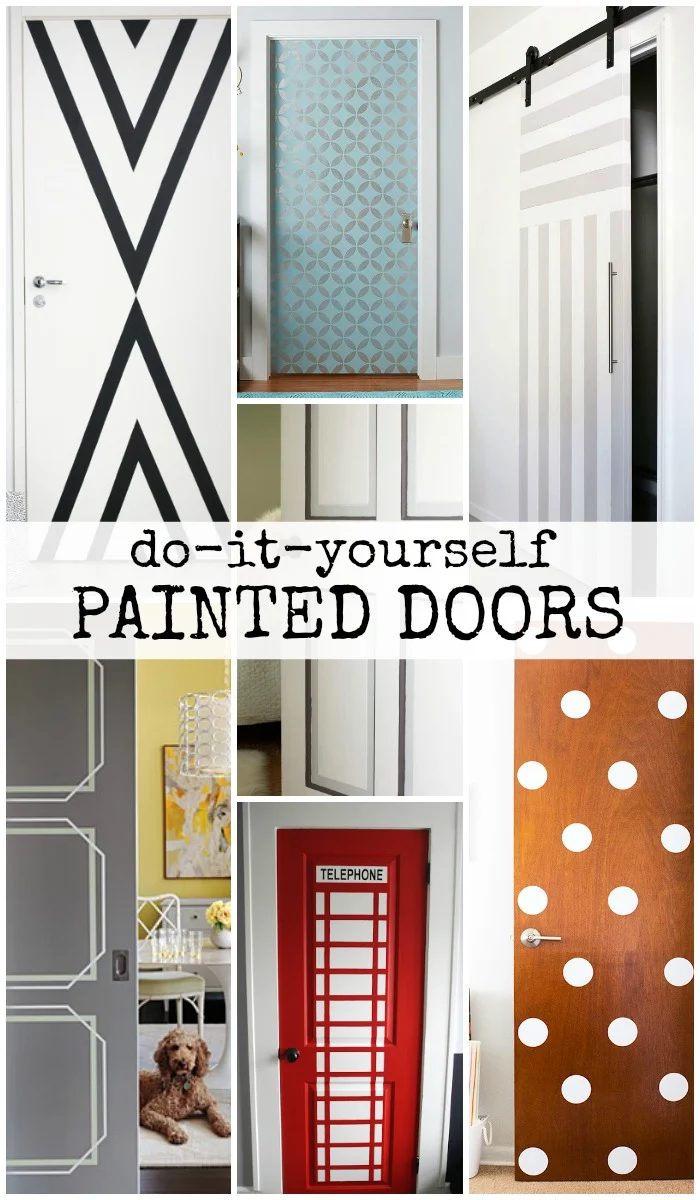
plus more creative Handmade painted doors – well fitted for updating a boring flat door!