
As winter’s chill begins to fade and the first whispers of spring are carried on the breeze, there’s a unique magic in coaxing nature’s beauty to bloom indoors. While spring “is busting out all over” (a delightful nod to classic cinema for those who remember!), sometimes we long for its vibrant colors and delicate fragrances a little sooner, or perhaps in places where the weather hasn’t quite caught up. This is where the art of forcing branches comes into play – a simple yet profoundly rewarding practice that allows you to bring the promise of spring directly into your home, transforming barren branches into breathtaking displays of early blossoms.
Forcing branches means cutting dormant branches from flowering trees or shrubs, bringing them indoors, and providing them with conditions that mimic spring, thereby encouraging them to bloom ahead of their natural schedule. Imagine a vase filled with delicate cherry blossoms in your living room in February, or cheerful forsythia brightening a corner when the world outside is still grey. It’s a truly wonderful way to connect with the changing seasons, infuse your living space with natural beauty, and even add a touch of handcrafted elegance to your decor. (Of course, for those with severe pollen allergies, this might indeed sound like a fragrant nightmare – but for most, it’s a delightful dream come true!)
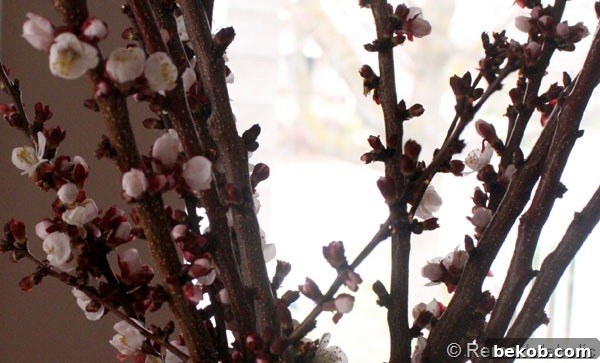
I recall an instance two years ago when visiting my mother’s home. My brother had just given their apricot tree a much-needed pruning – it had been particularly enthusiastic that year! The yard was strewn with branches, each laden with promising buds, just waiting for their moment. I couldn’t resist. I gathered a generous armful, brought them inside, gave the ends a fresh cut, and arranged them in a large vase. Because it was already quite late in the season, the transformation was swift and stunning. Within days, those seemingly bare branches erupted into the most exquisite display of apricot blossoms I had ever witnessed, continuing to bloom gloriously for days on end. Though I regrettably forgot to capture a second picture once they were in full splendor, I hope you can envision the sheer beauty from the initial photos. Do you see all those abundant buds? Every single one burst into magnificent bloom, filling the room with subtle charm.
The Enchanting Art of Forcing Branches: A Step-by-Step Guide
Bringing the joy of early spring blooms into your home is a simple yet deeply satisfying project. Whether you’re a seasoned gardener or a curious beginner, forcing branches offers a delightful connection to nature’s cycle. Here’s how you can achieve your own stunning indoor floral displays:
1. Selecting the Perfect Time and Plants for Forcing
The success of forcing branches largely depends on timing and the right choice of plant material. The ideal window for cutting branches is in late winter to early spring, typically January through March, before the buds naturally begin to swell and break open outdoors. You want the branches to be dormant but with buds that have experienced enough cold temperatures to be ready for springtime awakening. Look for trees and shrubs in your yard, or consult with a local florist who might have suitable cuttings. Some varieties are more eager to bloom than others.
Excellent candidates for forcing include:
- Apricot: Delicate, often fragrant blooms that are truly a harbinger of spring.
- Apple: Beautiful pink and white blossoms that emit a lovely scent.
- Cherry: Iconic, ethereal blooms that range from white to soft pink, perfect for elegant arrangements.
- Dogwood: Known for its distinctive, often white or pink bracts that resemble petals.
- Forsythia: One of the easiest and most reliable to force, bursting with cheerful yellow flowers.
- Honeysuckle: Fragrant and often uniquely shaped flowers, adding a touch of whimsy.
- Lilac: Extremely fragrant, bringing the intoxicating scent of spring into your home.
- Magnolia: Large, showy blossoms that make a dramatic statement.
- Pear: Abundant white blooms that appear before the leaves.
- Pussy Willow: Beloved for its soft, fuzzy catkins that emerge even before the leaves.
- Redbud: Features striking magenta-pink flowers that cling directly to the branches.
- Viburnum: Produces clusters of white or pink flowers, though some varieties can have a strong, distinct aroma.
- Spirea: Offers sprays of tiny white or pink flowers, creating a delicate, airy feel.
When choosing branches, aim for those that are at least 1 foot long and show a good number of well-formed, plump buds. The more developed and swollen the buds appear, the closer they are to their natural bloom time, and the higher your chances of success and quicker results will be.
2. Harvesting Your Branches with Care
Once temperatures have consistently risen above freezing, but before the buds have begun to naturally open outdoors, it’s time to collect your branches. Use a very sharp pruning shear or knife to make clean cuts. This prevents damage to the parent tree or shrub, ensuring its health and future growth. When making cuts, aim to prune branches that are either interfering with others, growing in an undesirable direction, or are simply excess, effectively doing a light pruning that benefits the plant. It’s often a good idea to cut a few more branches than you think you’ll need, just in case some don’t bloom or if you desire a fuller arrangement.
3. Preparing Your Branches for Optimal Hydration
As soon as you bring your freshly cut branches indoors, it’s crucial to prepare them for maximum water absorption. Recut the bottom end of each branch. Make a clean, angled cut (about 45 degrees) at the base of the stem. This angled cut increases the surface area exposed to water, allowing for better hydration. Immediately after cutting, place the branches into a vase filled with clean, fresh water. The deeper the water, the better, as it allows more stem area to absorb moisture. If you have flower food packets, add one to the water. Alternatively, you can create a simple homemade solution: a teaspoon or so of sugar (to feed the plant) and a few drops of bleach (to inhibit bacterial growth) per quart of water can work wonders. For particularly woody stems, such as those from apple or dogwood trees, some gardeners find it beneficial to gently score the bark or lightly crush the bottom inch or two of the branch end with a hammer. This further aids water uptake by exposing more of the vascular tissue.
4. Creating the Ideal Indoor Environment
To trick your branches into thinking spring has arrived, you need to replicate some of the key conditions they would experience outdoors. Humidity is crucial. Regularly mist the branches with a spray bottle, especially in drier indoor environments. Think of it as providing “April showers” in miniature. Position your vase in a location that receives indirect sunlight. Avoid placing the branches in direct sun, which can dry them out too quickly, or near a heater vent, which will also accelerate dehydration and shorten their blooming life. A cool, consistent temperature is generally best. The time it takes for branches to bloom can vary significantly. Some eager varieties might burst into flower within a week, while others, particularly if cut very early in the season, could take up to eight weeks to unfurl their buds. Patience is key! During this waiting period, remember to change the water every 3 to 4 days, or whenever it appears cloudy, to keep it fresh and clean and to replenish any lost nutrients from flower food.
5. Enjoying and Extending the Life of Your Blooms
Once your branches begin to unfurl their spectacular blooms, you’ll want to take steps to prolong their beauty. You may find it beneficial to re-cut the stems again slightly at an angle. This can clear any blockages that might have formed in the vascular system, allowing for continued easy water uptake. Continue to keep the water fresh and full, and avoid direct sunlight or heat sources. Forced branches typically last about one to two weeks in bloom, depending on the variety and initial stage of the buds. With proper care, you can maximize your enjoyment of these early harbingers of spring.
Common Challenges and Troubleshooting Tips
While forcing branches is generally straightforward, you might encounter a few hurdles. Here are some common issues and how to address them:
- No Blooms or Very Few Blooms: This is often due to cutting branches too early, before they’ve received enough chilling hours to break dormancy, or too late, after their natural bloom cycle has passed or they’ve already started to dry out. Ensure your chosen branches have plump, healthy buds. Also, inadequate hydration or a lack of humidity can prevent buds from opening.
- Bud Blast (Buds Dry Up and Fall Off): The most frequent culprit here is insufficient humidity. Indoor air, especially during winter, can be very dry. Increase your misting frequency, or consider placing the vase on a tray of pebbles with water, ensuring the vase bottom isn’t submerged.
- Mold or Slime in the Water: This indicates bacterial growth, which can quickly clog the stems and prevent water absorption. Change the water more frequently, clean the vase thoroughly, and ensure you’re using a small amount of bleach or a commercial flower food containing antimicrobial agents. Remove any leaves that might be submerged in the water.
- Weak or Faded Blooms: If your blooms lack vibrancy, it could be due to insufficient light (even indirect light should be bright enough) or a lack of nutrients. Ensure fresh flower food is consistently provided.
Beyond the Basics: Creative Displays and Seasonal Enjoyment
Forced branches offer endless possibilities for creative expression in your home. A single, dramatic magnolia branch in a tall, minimalist vase can become a stunning focal point. A cluster of fragrant lilac or apple branches can transform a dining table into a spring garden centerpiece. Consider mixing different types of forced branches for a textured and varied display, or combine them with other early spring elements like bulbs (narcissus, tulips) grown in pots. Large floor vases are perfect for showcasing taller branches, creating a sculptural presence. The ephemeral nature of these indoor blooms makes them all the more special, a fleeting reminder of the beauty that is emerging just beyond your windows.
To inspire your own creative displays, here are some examples of the beauty you can cultivate:
Dogwood:
Lilac:
Apple:
Pussy Willow:
Forsythia:
Cherry:
Viburnum (although, I find the scent of these can be quite polarizing – am I the only one?)
Redbud:
Spirea:
Have you ever tried your hand at forcing branches? It’s a truly magical experience that brings a piece of the awakening natural world right into your home. We’d love to hear about your experiences, successes, and any additional tips or tricks you’ve discovered along the way! Share your insights and help inspire others to embrace this delightful early spring tradition.